

Guest Blogger and long-time Council friend, Bob W. presents Part 33 of a series dealing with Alcoholism and Addiction from a Mystical, Mythological Perspective, reflecting Bob’s scholarly work as a Ph.D. in mythological studies.
In the years up to the Civil War, the young American Nation struggled mightily over the horrific experience of Slavery. The governance principle over this issue beginning with the first Congress in 1790 was that its lawfulness was solely an issue for that each State to decide for itself. But, as the Nation grew rapidly, new states were being added all the time and a great concern arose in Congress about the balance of power between the slave states and free states. In 1850, a Compromise was reached allowing California to be admitted to the Union as a free state. The primary offset for the slave states was the enactment of the Fugitive Slave Act which made it a crime for anyone in a free state to harbor a fugitive slave and required the law enforcement agencies of all states to prosecute all such offenders. Fugitive slaves captured in this process were not accorded any rights, just returned to their original slave masters in the South.
The novelist, Toni Morrison, won a Pulitzer Prize in 1988, for her story, Beloved, about a woman, named Sethe, living in Ohio in the 1870’s in the aftermath of the Civil War. She is haunted by events 20 years earlier, when, as a fugitive slave living free in Ohio, she is found by bounty hunters working for her former slave master. In a desperate act at the time, she murders her daughter rather than risk that she be chained to a life in slavery. Written in the heavy African American dialect of the time and with complex character development, this is a very powerful story. Most importantly, though, it carries a profound psychical energy about the presence of slavery in our American Heritage, a condition which has influenced our history in so many powerful and tragic ways for so many centuries.
From our perspective here, I see this tale as a wonderful example of the power of story to convey the mythos of a horrific history. For all of us, the multitudinous, disastrous experiences of our active life in the disease were equally horrific. Breaking free from these conditions required extreme measures. Faced with the recurring experience of unspeakable behaviors in our alcoholic lives, we got to the point where something inside of us, some element of our imbedded addict, had to die. Such action was necessary to prevent further disasters. Just as Sethe kept her daughter from slavery and the United States finally outlawed the practice of keeping slaves, a fundamental change in ourselves was critical. Doing whatever it took became necessary to avoid the likelihood that our life would continue to descend into an abyss of slavery-like conditions, each of us entirely enslaved to the masters that are alcohol and drugs.
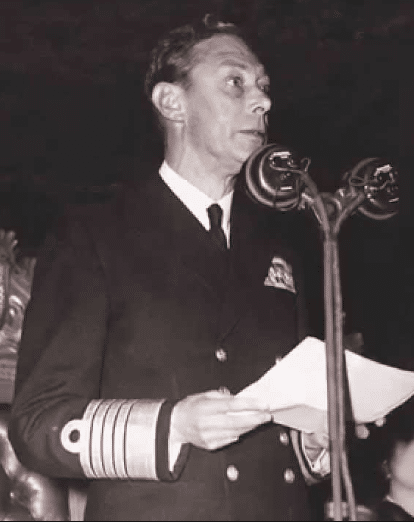 The movie, The King’s Speech, with Colin Firth and Geoffrey Rush, is about King George VI who, despite a terrible speech impediment, must conquer his affliction and rise up to lead England in its critical opposition to Germany in the years up to the beginning of WWII. It is a stirring portrayal of the courage of a leader and his people in one of the ugliest times in human history. This period has always held a fascination for me, having been born in its early years, because it required so much courage of everyone, so much energy in the face of enormous terrors for everyone, leaders and citizens alike.
 Much of the modern comic and graphic novel genre focuses on the paranormal activities of figures of unusual maybe even absurd abilities. One such figure is Hellboy, a creature spawned in Hell and accidentally released into the real world through a series of experiments by certain fictitious Nazi scientists. Hellboy’s ascension into the World and the places he found himself were also facilitated by the work of a British scientist and the US Air Force, who take him to a secret facility in New Mexico, where he is raised and, despite his origin in Hell, becomes a very powerful force for good.