
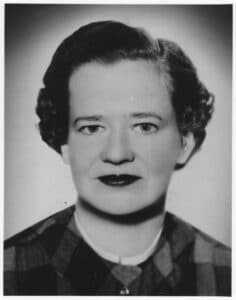
Soon after Bill W. publishes Alcoholics Anonymous, The Council’s forerunner, Houston Committee for Education on Alcoholism (HCEA), forms after a speech by Marty Mann, the Executive Director of the National Committee for Education on Alcoholism.
The first alcoholism treatment clinic opens in Houston, co-sponsored by Baylor College of Medicine and Houston Committee for Education on Alcoholism. During that time, the clinic treated 139 patients, establishing a high standard of treatment in Houston.
After compiling and examining a history of HCEA, an organizing committee decides to form and incorporate a new organization — the Houston Committee on Alcoholism (HCA).

The American Medical Association recognizes alcoholism as a disease, shifting the perception from a moral failing to a chronic, treatable medical condition.
Fourth Circuit Court of Appeals rules that a chronic alcoholic cannot be arrested and treated as a criminal, though they may be detained for medical treatment, further establishing alcoholism as a disease rather than a crime.
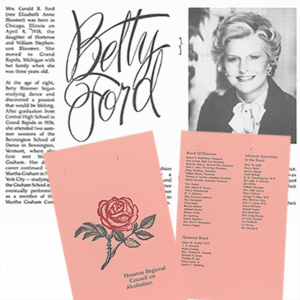
The Council hosts its inaugural Spring Luncheon featuring former First Lady Betty Ford as keynote speaker. 300 guests attend and The Council luncheon series is born, shining light onto the stigma of addiction.
The Development Director Search Committee hires Mel Taylor, MSW, after a five-month search.
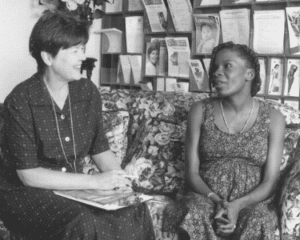
Project MOM (Maternal Opioid Misuse) is developed with Ben Taub Hospital to provide coordinated clinical care to expectant and postpartum mothers with opioid use disorder, reducing common barriers to care and improving health outcomes for mothers and their infants.
The Council begins the Dual Disorders program, formally acknowledging the interaction of mental health disorders and substance use disorders and providing integrated treatment for both.
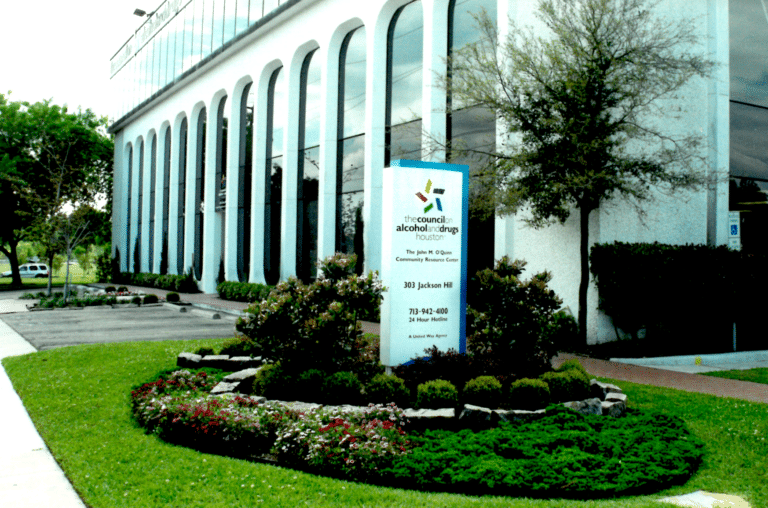
The name changes to The Council on Alcohol and Drugs Houston, and The Council launches a new brand and star logo, moving into its new home at 303 Jackson Hill.
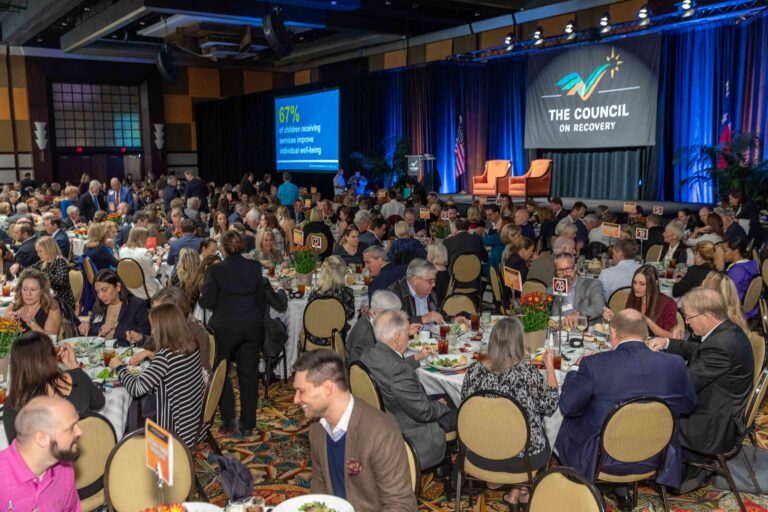
The Waggoners Foundation underwrites the organization and The Council successfully launches The Waggoners Foundation Speaker Series.
The Council acquires the Center for Recovering Families, providing a full range of affordable treatment, counseling, and recovery services focused on helping the entire family heal together.
The High Road merges with The Council, adding adolescent outpatient treatment to its list of services, expanding access to affordable recovery services to more ages.

In response to growing need, The Restoring Hope, Rebuilding Lives capital campaign raises $7,303,581. Construction begins to expand from one building to three, creating a campus environment and establishing The Council as the hub for Houston’s recovery community.
The Council’s Intake & Admissions Department is formed, providing a centralized team of trained staff to handle screening and admissions, making The Council the place to start for those struggling with substance use.

The first Kids Camp was held, a four-day program for children from families who have struggled with addiction. Activities helped children learn about addiction in age-appropriate ways, open lines of communication, and gain tools to recover as an entire family, breaking the cycle of addiction for generations to come.
The Council contracts with The Harris Center to place 30 chemical dependency professionals at their facilities to help screen and stabilize clients with substance use and mental health disorders, allowing The Council to meet clients where they are and begin their path to recovery sooner. Recovery Coaches are hired and integrated into agency services, providing ongoing peer support.

The Council on Alcohol and Drugs Houston’s name is changed to The Council on Recovery, with the launch of a new brand and star logo.
The Council on Recovery receives a grant from the Hurricane Harvey Relief Fund to provide services at no cost to qualified Houston-area hurricane victims. The Council uses the funds to provide free help for people still struggling with storm-related trauma, substance use issues, and mental health disorders, many months after the hurricane hit Texas.

The 2018 Houston Opioid Summit, hosted by The Council, featured national, state, and local speakers to highlight the impact of the opioid epidemic across sectors.
The Spring Branch Independent School District approves launching Choices in all SBISD high schools and select middle schools, providing prevention education to more Houston-area youth.
The Council is awarded the state-funded contracts to provide Discovering Choices outpatient treatment services, extending the quality and affordability of treatment available, regardless of ability to pay.
For the first time in its history, The Council on Recovery offers telehealth services to keep its staff, clients, and guests safe during the COVID-19 pandemic, ensuring continued care during unprecedented times.
The Council on Recovery celebrates its 75th anniversary of serving the Houston community, and launches a yearlong communications campaign to tell the story of the millions of lives touched by our work.
After 28 remarkable years of service, Mel Taylor, MSW, President & CEO of The Council on Recovery, retires. Mary Beck, LMSW, is appointed to the role of President & CEO.
Through the Center for Co-Occurring Disorders, The Council begins providing consultation services to healthcare organizations, focusing on systemic change to ensure clients have access to substance use services wherever they are.
After intense review, The Council is awarded a three-year Commission on Accreditation of Rehabilitation Facilities (CARF) accreditation for its clinical services. Having met rigorous standards for quality of service, achieving accreditation demonstrates The Council’s dedication to delivering safe, effective, and high-quality services and commitment to ongoing improvement.
Following the remarkable support of the Petersen family, the beloved Council luncheons are renamed The Petersen Family Speaker Series. They continue to serve a three-fold purpose of raising funds, attracting new friends, and ending the stigma of addiction by sharing a message of hope for recovery.
Judy M. Chavez, MBA, is appointed President & CEO.
Renovations begin on The Hamill Foundation Conference Center. Modernized technology and interior upgrades strengthen The Council’s capacity to host high-quality events for the recovery community, welcoming tens of thousands of people annually.